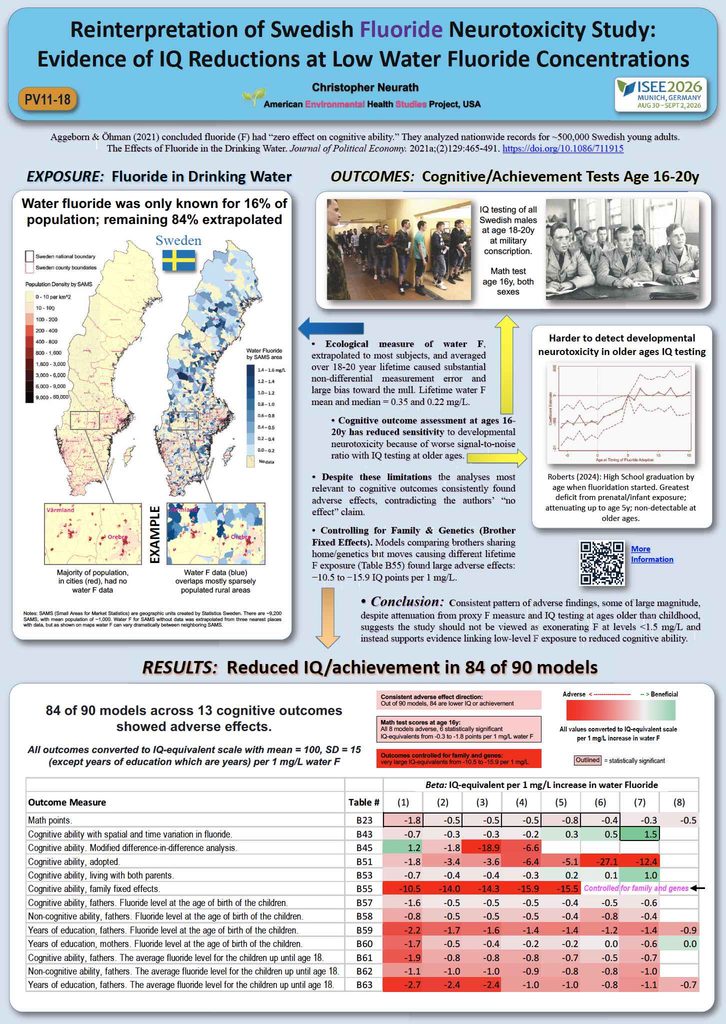
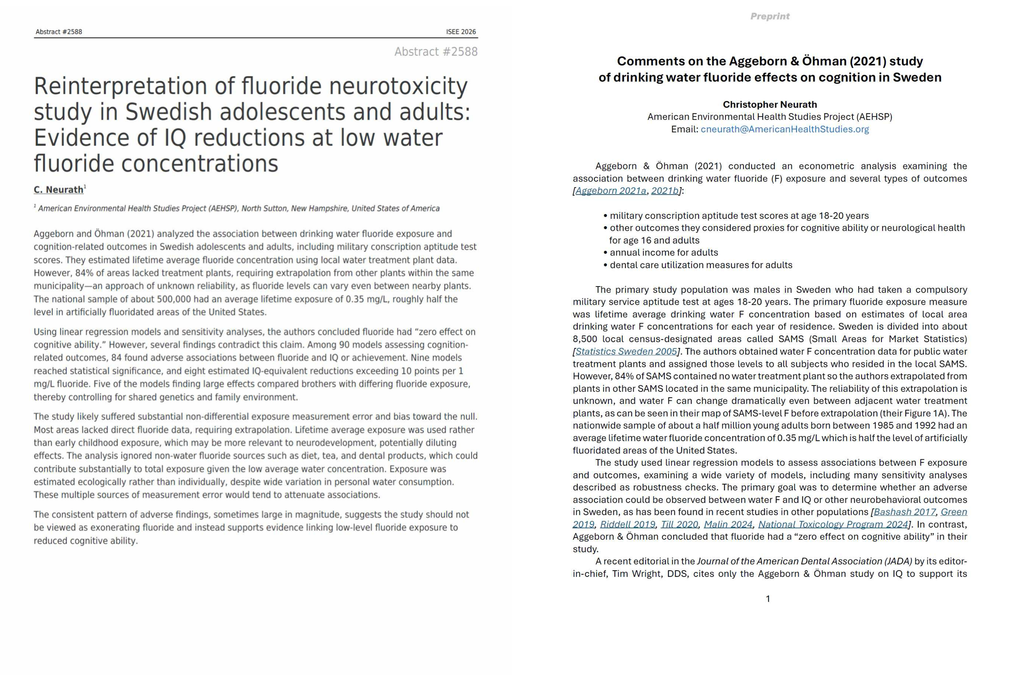
FAN’s Research Director, Chris Neurath, presented new findings at the International Society for Environmental Epidemiology (ISEE) 2026 Conference in Munich, Germany (August 30 – September 2, 2026). His presentation reinterpreted a Swedish study by Aggeborn & Öhman (2021), which fluoridation advocates have claimed shows no adverse effect of fluoride on cognitive function.
Neurath’s re-analysis revealed that when the study’s data and 90 statistical models relevant to cognitive effects are examined carefully, they actually present consistent evidence linking low-level fluoride exposure to reduced IQ and academic achievement.
Major Flaws Biased the Original Study Toward “No Effect”
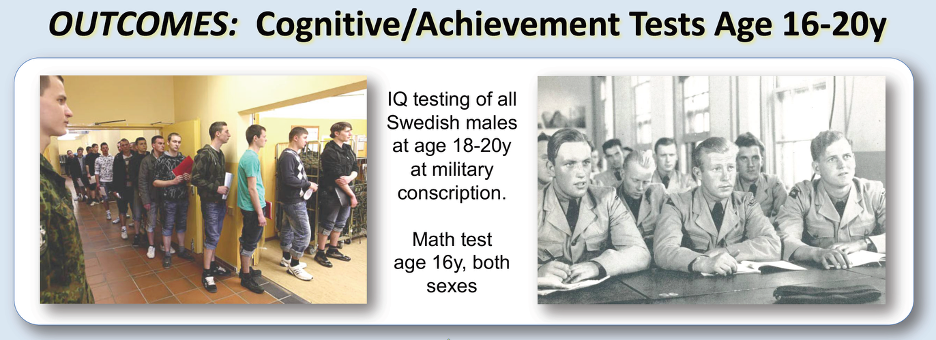
The original Swedish study examined nationwide records for over 500,000 young adults (ages 16–20) with a mean lifetime water fluoride concentration of 0.35 mg/L — roughly half the level added to artificially fluoridated water in the United States. However, the study suffered from methodological limitations that likely created substantial random measurement error, biasing results toward finding no effect:
- Ecological Design with Extreme Exposure Extrapolation: Direct water fluoride measurements were available for only 16% of the population. The remaining 84% had exposure extrapolated from neighboring areas, even though local fluoride levels vary sharply across short distances.
- Exposure Timing & Older Outcome Testing: The study evaluated cognitive outcomes in late adolescence/early adulthood (ages 16–20). IQ testing at older ages has a lower signal-to-noise ratio for detecting early neurodevelopmental damage compared to testing in early childhood. A separate presentation by Neurath at ISEE 2023 found that older testing age in fluoride-IQ studies can greatly attenuate observed IQ loss.
- Unmeasured Exposure Sources: The study evaluated lifetime average water fluoride while ignoring major non-water fluoride sources like diet, tea, and dental products.
- Averaging Water Fluoride over 16-20 Years greatly dilutes the most susceptible early ages. Studies have found fluoride produces greatest IQ losses from early life exposure before age 5 years, and from pre-natal exposure that was included at all in Swedish study exposure estimate.
What the Data Actually Showed: 84 of 90 Models Found Harmful Effects
Despite these heavy attenuation biases, a detailed review of the paper’s extensive supplementary tables revealed a clear pattern:
- 84 out of 90 models assessing cognition and educational achievement found negative/adverse associations with water fluoride.
- 9 models reached statistical significance, and 8 models estimated severe IQ-equivalent reductions exceeding 10 points per 1 mg/L increase in water fluoride.
Strongest Evidence: Controlling for Family & Genetics (Brother Fixed Effects)
Of particular importance were the study’s family fixed-effects models (Table B55 in the paper’s Appendix). These analyses were the only ones that controlled for genetics and home environment by comparing brothers raised in the same family who had different lifetime fluoride exposures because their family moved between areas with different fluoride levels.
For example, if an older brother was born in a town with 1.0 mg/L water fluoride, but the family later moved to an area with 0.1 mg/L before the younger brother was born, the younger brother would have significantly lower lifetime fluoride exposure. But the brothers would share the same parents, have 50% of their genes in common, and the same home environment, thus controlling for these strongest predictors of adolescent/adult IQ.
In these tightly controlled models, a 1mg/L increase in drinking water fluoride was associated with a huge drop of 10.5 to 15.9 IQ-equivalent points.
Conclusion
As Neurath concluded in his presentation:
“The consistent pattern of adverse findings, sometimes large in magnitude, suggests the study should not be viewed as exonerating fluoride at levels <1.5 mg/L and instead supports evidence linking low-level fluoride exposure to reduced cognitive ability.”